
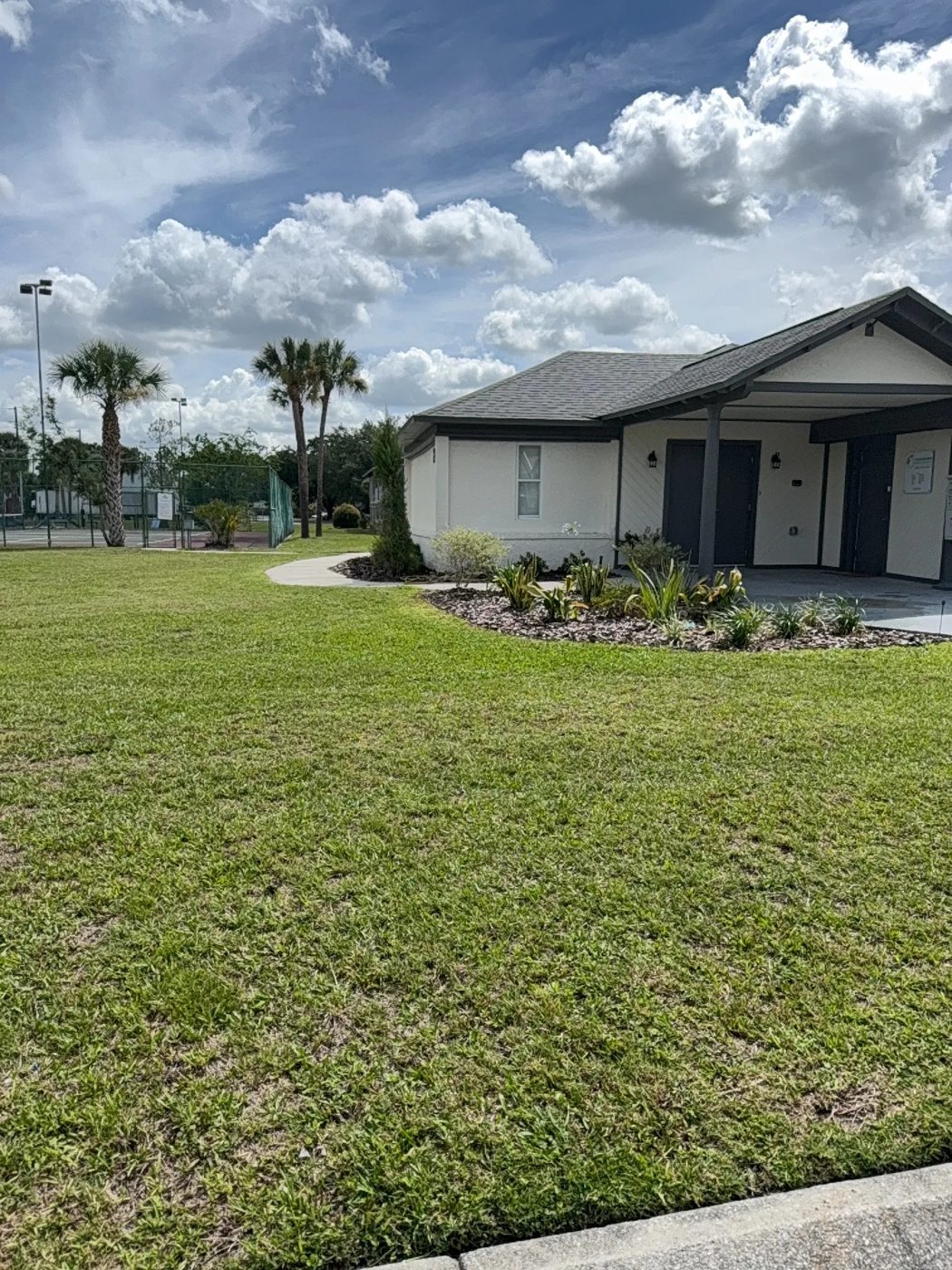
Property owners and managers in Tampa and the rest of Hillsborough County often ask a practical question: how often should a commercial lawn be mowed? In this climate, the answer is less about one fixed number and more about keeping a steady schedule that matches how fast the grass actually grows.
Tampa lawns grow quickly because of heat, humidity, rain, and a long growing season. That helps a property stay green, but it also means a business lawn can look overgrown in a short time if visits are irregular. Recurring commercial lawn maintenance is how most small commercial sites stay consistent week after week.
Why a set schedule matters more than an occasional cut
An occasional mow can make a property look better for a few days. A set schedule is what keeps it from slipping between visits.
When service is irregular, the grass gets too long, then it is cut back hard, then it looks uneven again. Edges grow out along sidewalks and curbs. Clippings and debris collect on walkways. Beds start to look untidy. Customers may not name those details, but they notice that the property does not look as cared for as it should.
A defined schedule also makes day-to-day management easier. You know when the crew is coming. The work can be planned around business hours, deliveries, and customer parking. You are not left wondering whether someone will show up this week.
How often is typical for a Tampa commercial property?
There is no single frequency that fits every site. The right schedule depends on the size of the property, the type of turf, recent rainfall, the time of year, and how polished the grounds need to look.
During Tampa’s faster-growth months, many commercial properties do well with weekly service so the lawn never gets ahead of the crew. After a stretch of heavy rain, grass can grow even faster, and a missed week is more noticeable. During slower growth periods, some properties can go a little longer between visits and still look consistent, but the edges, beds, and walkways still need attention.
The right frequency should be set after looking at the property, not copied from a generic calendar. When Green Roots prepares a commercial proposal, we review access, how often the site should be visited, and the presentation you want before pricing. An on-site evaluation is scheduled when needed.
Mowing is only part of a complete visit
Cutting the grass is the most visible task, but it is not the whole job. A finished commercial visit typically also includes:
- Edging along sidewalks, curbs, and parking areas
- Trimming in places a mower cannot reach
- Blowing clippings and debris off walkways, entrances, and curbs
- Landscape-bed care
- Seasonal cleanup
These services are part of the commercial lawn maintenance and lawn maintenance work Green Roots provides in Tampa Bay. A property can be freshly mowed and still look unfinished if the edges are ragged or the entrance is covered in clippings.
If you are comparing vendors, it is worth asking what is included in a regular visit, not only how often the grass will be cut.
The areas customers notice first
On a commercial property, some areas do more work than others.
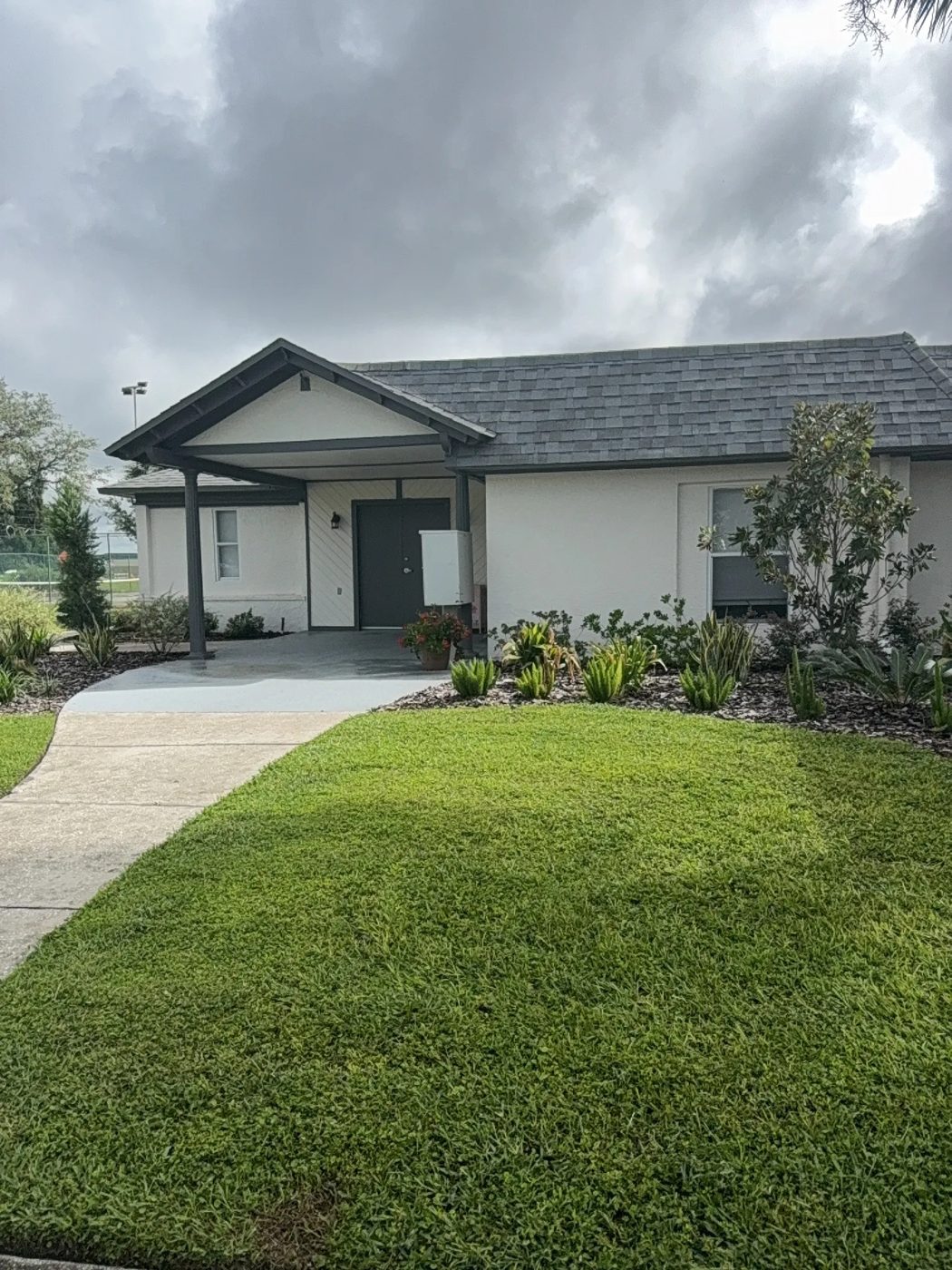
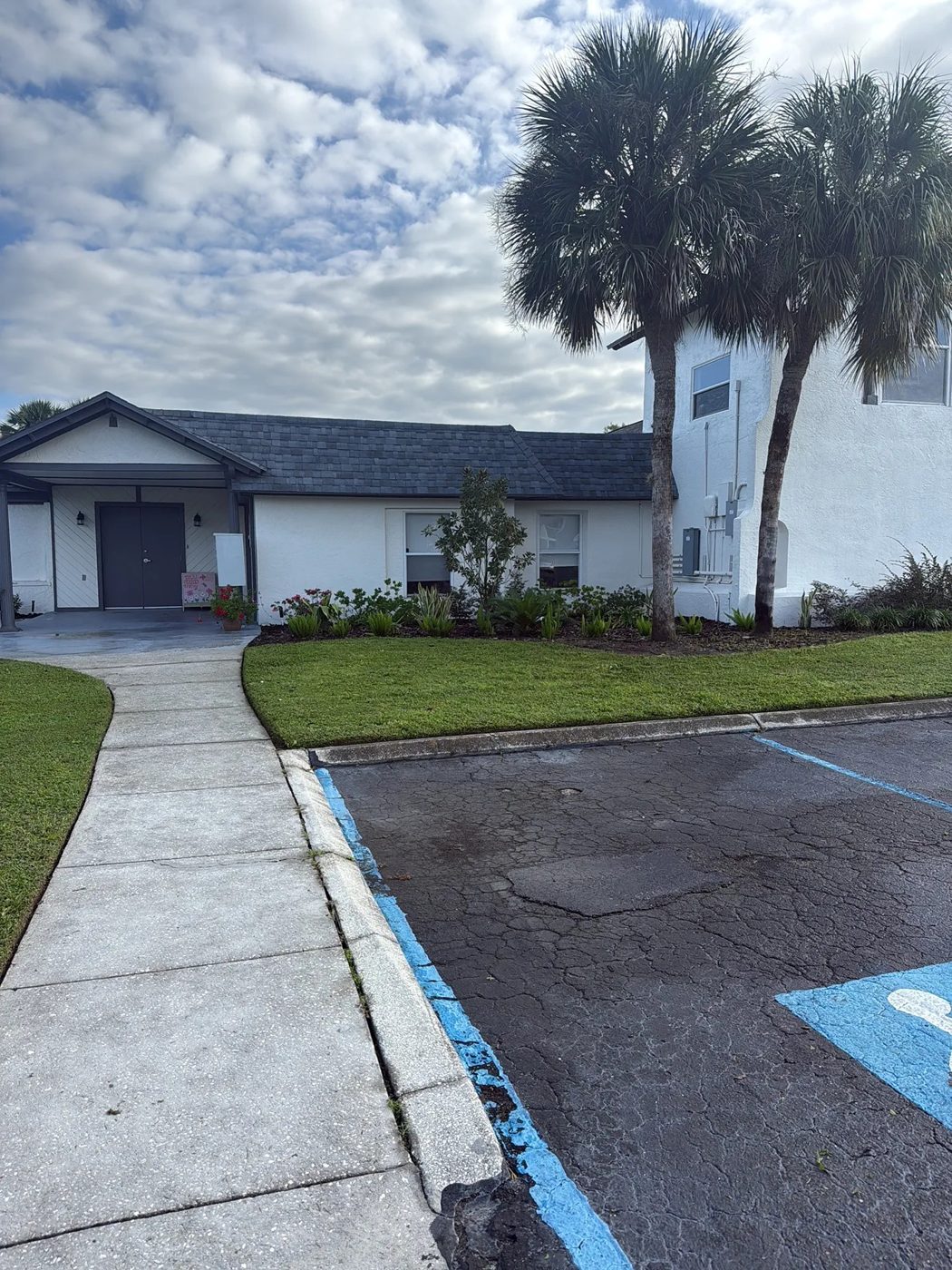
The entrance and the walk from the parking area to the door are where customers, patients, and guests form a first impression. Parking-lot islands, curbs, and the turf along the road or sidewalk are what people see from the street. If those spots are clean and evenly kept, the whole property looks more intentional.
That is especially true for small plazas, independent doctor's and dental offices, local restaurants that control their own grounds, and small office buildings. It is also true for local owner groups with several Tampa Bay locations. The standard at the front door should not change from one site to the next.
Tree and palm growth can affect those same high-visibility areas. Branches that block a sign, a walkway, or a driveway are a maintenance issue as well as an appearance issue. Our article on commercial tree trimming explains why clearance and visibility matter on a business property.
How the season changes the work in Hillsborough County
Lawn maintenance in Hillsborough County is not the same in every month.
In warmer, wetter stretches, turf grows quickly and visits may need to stay frequent to keep a consistent height and a clean edge. In slower periods, the lawn may not need to be cut as often, but blowing, edging, and bed care still keep the property from looking forgotten. Seasonal cleanup — fallen leaves, storm debris, or overgrowth that built up in corners — is often what brings a site back to a finished look after a change in weather.
Florida storms can also leave branches and debris on a commercial property. Storm cleanup can be requested when that work is needed and is within the current service scope.
The point is not to follow a rigid calendar no matter what the property is doing. The point is to have a recurring plan that can adjust with the season so the grounds stay consistent.
Signs the current schedule is not keeping up
You do not always need a landscape background to tell when a commercial lawn program is falling behind. Common signs include:
- Grass that looks noticeably different from one week to the next
- Overgrown edges along sidewalks, curbs, and parking islands
- Clippings or debris left on walkways and at the entrance
- Beds that look weedy or untidy between visits
- A trim line around trees, signs, or light poles that has gotten messy
- One location in a group that looks less cared for than the others
If several of those are showing up regularly, the property may need a more consistent schedule, a clearer service scope, or both.
Request a proposal for your property
Green Roots is a family-owned company serving Tampa, South Tampa, Temple Terrace, and other communities throughout Hillsborough County since 2007. Recurring commercial lawn maintenance is a strong fit for small commercial sites that one crew can keep looking consistent week after week.
A proposal starts with the property type, address, requested services, and whether you need recurring maintenance or a one-time improvement. Free estimates are available. When needed, an on-site evaluation is scheduled before pricing.
Call (813) 291-0071, or request a quote. Office hours are Monday through Friday, 9 a.m. to 5 p.m.